The tie as gesture
A visible wrap and knot replaces the anonymous closure, bringing the act of fastening into the silhouette.
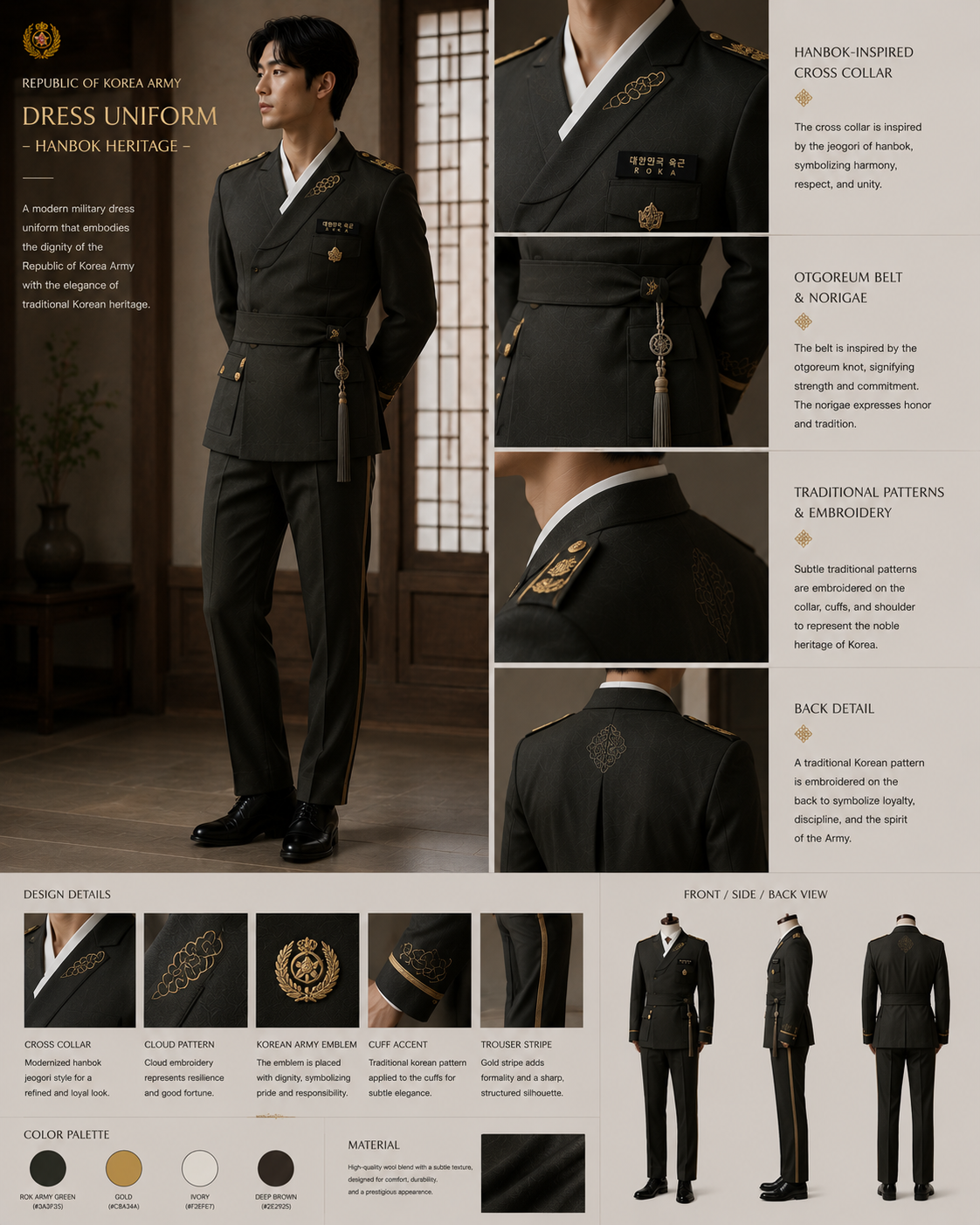
Ceremonial studies · A new direction
A proposal for a more Korean visual language in ceremonial dress, moving from uniform convention toward proportion, ritual, and inherited form.
01 · From reference to reinterpretation
Earlier ROKA studies established a starting point, but the next direction should move beyond generic Western service-dress conventions. The opportunity is to make ceremony feel unmistakably Korean through the cut, the tie, the surface, and the space around the body.
The house interpretation keeps the discipline of formal dress while returning to the gestures that belong to Choe Collection: the jeogori line, the goreum tie, the norigae, and a restrained pattern language.
See the house tailoring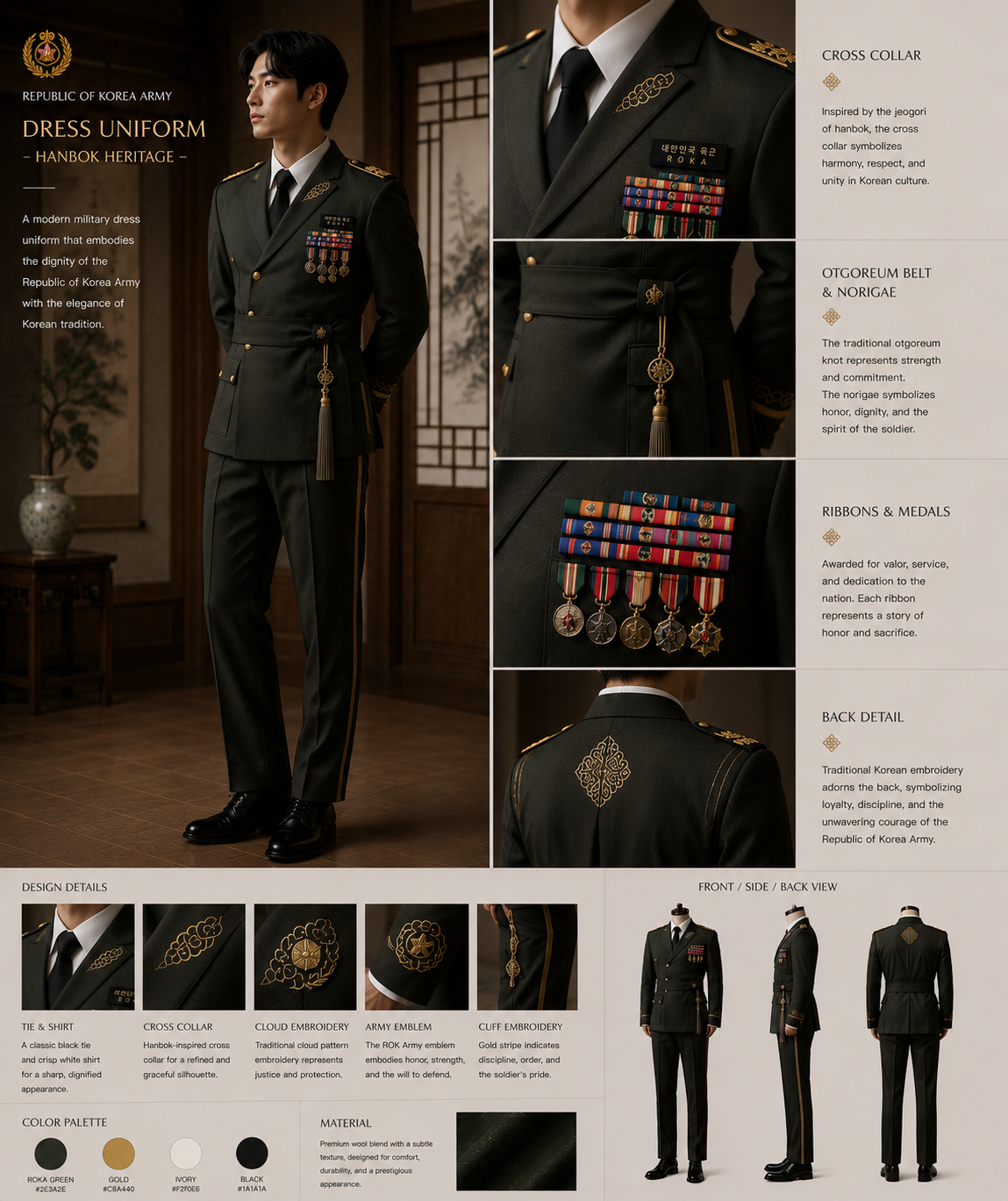
Officer study · cross collar, otgoreum belt, norigae, and restrained Korean pattern.
02 · The Korean vocabulary
The military page becomes a design study, not a uniform catalog. These are the cultural and visual cues that can carry the concept forward.
A visible wrap and knot replaces the anonymous closure, bringing the act of fastening into the silhouette.
A hanging detail can add movement and meaning without relying on imported insignia or rank symbols.
The crossed collar, vertical fall, and controlled volume create a distinct Korean rhythm before decoration begins.
Cloud, floral, and geometric motifs can be used sparingly as house language rather than as literal military marks.
03 · Concept archive
How can ceremonial dress express a clearer Korean identity? The complete study moves through officer, enlisted, womenswear, and headwear proposals.
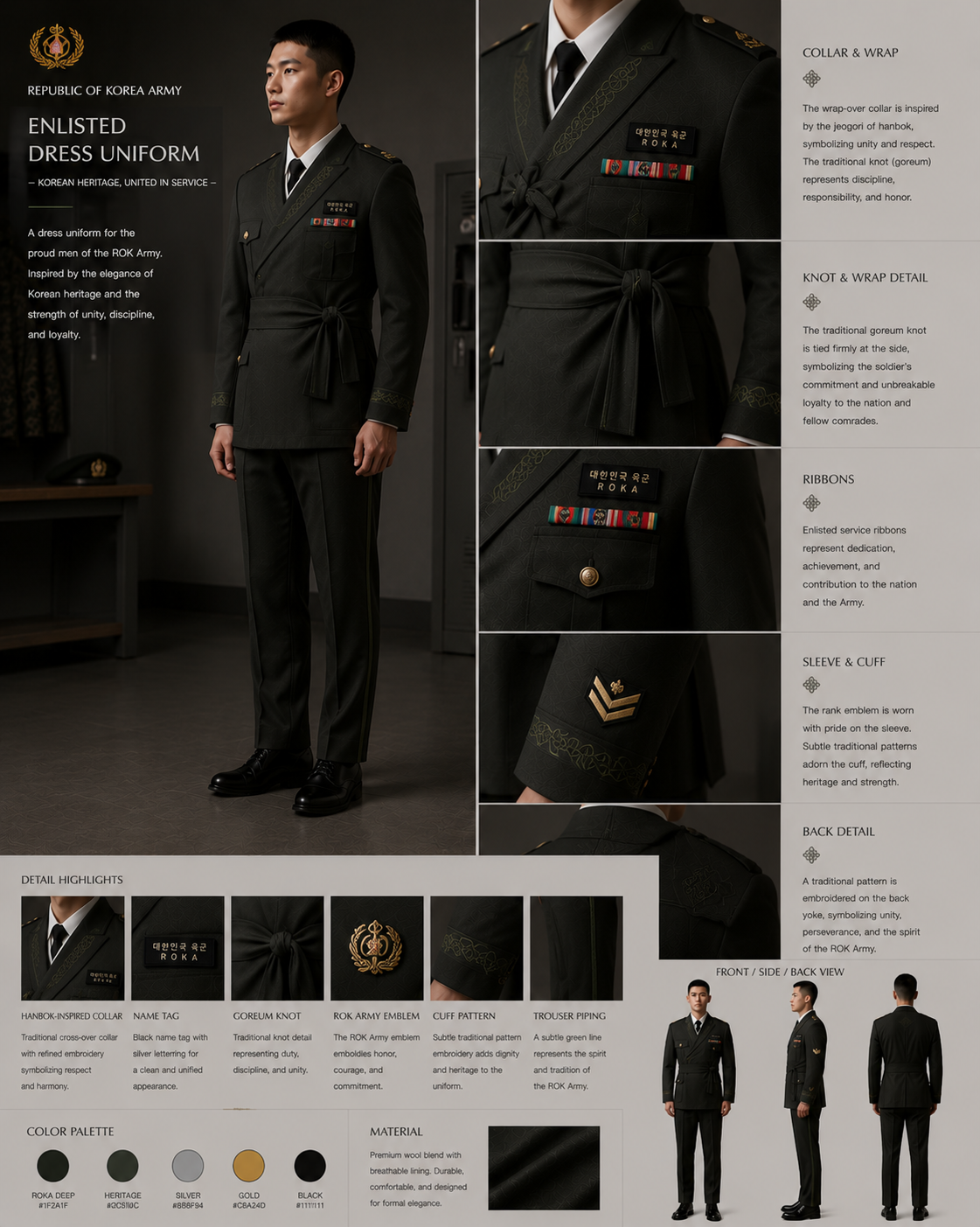
A goreum-led front replaces the anonymous single-breasted convention.
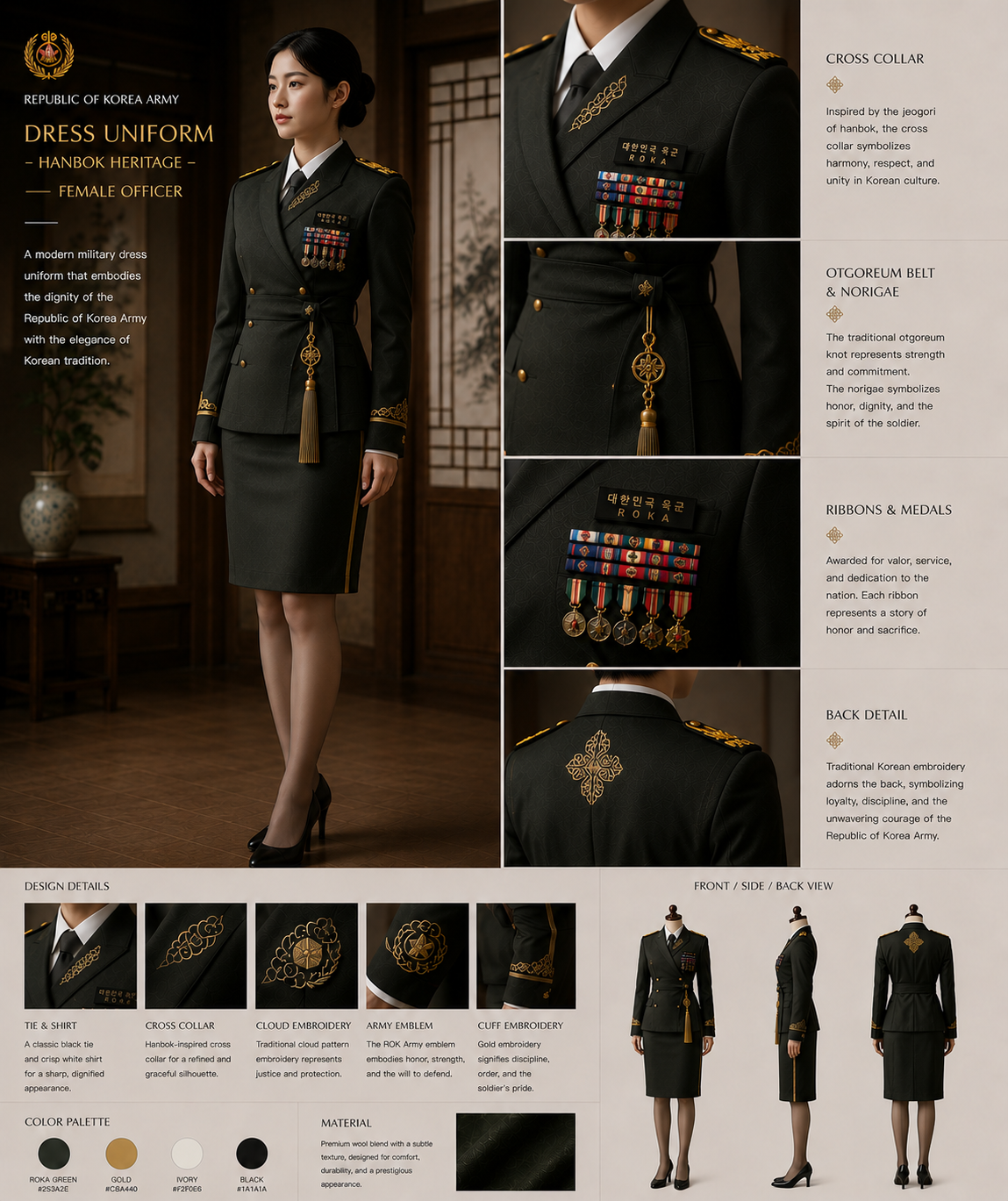
The same collar and pattern language translated without losing formality.
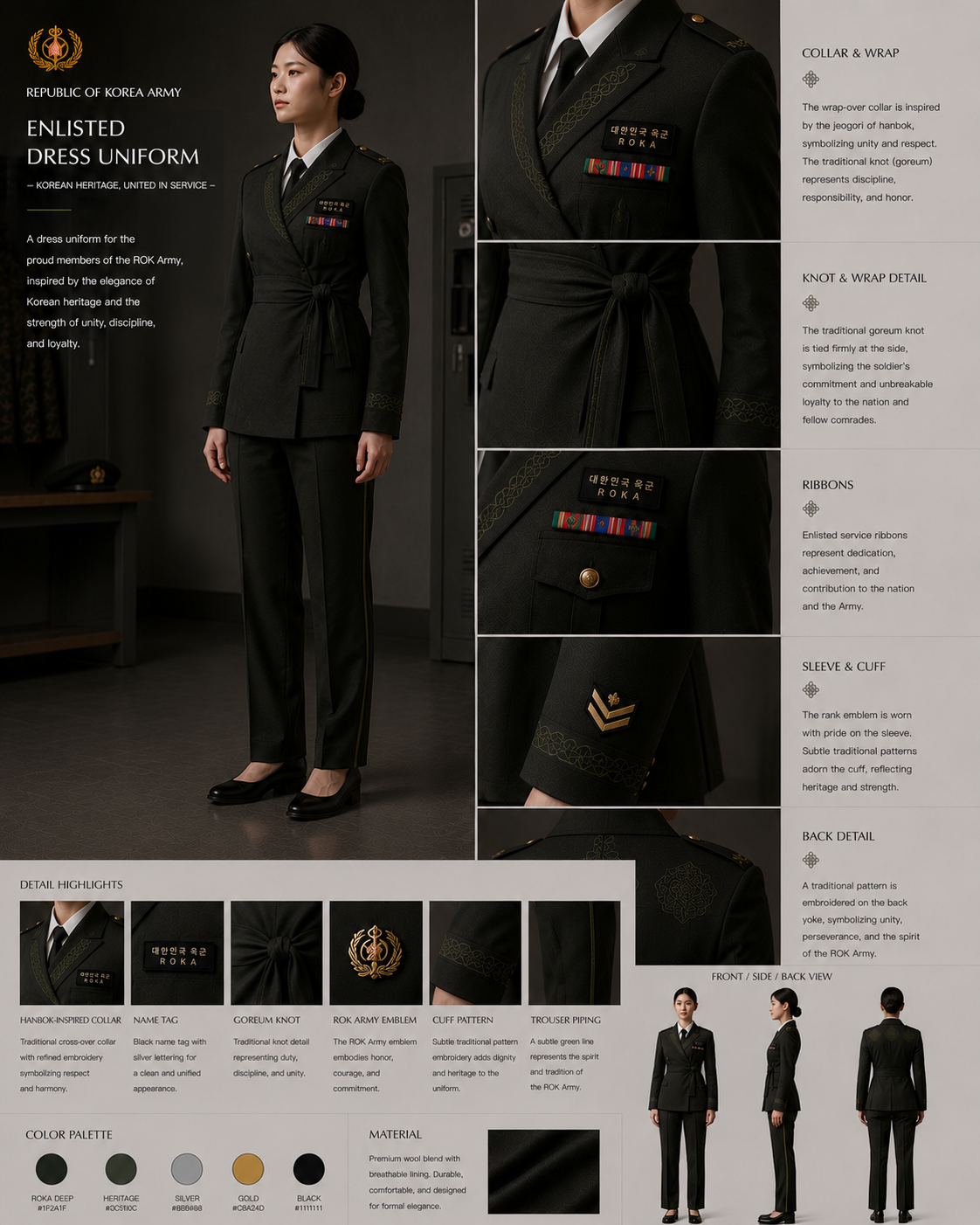
Rank changes, while the Korean identity of the silhouette remains legible.
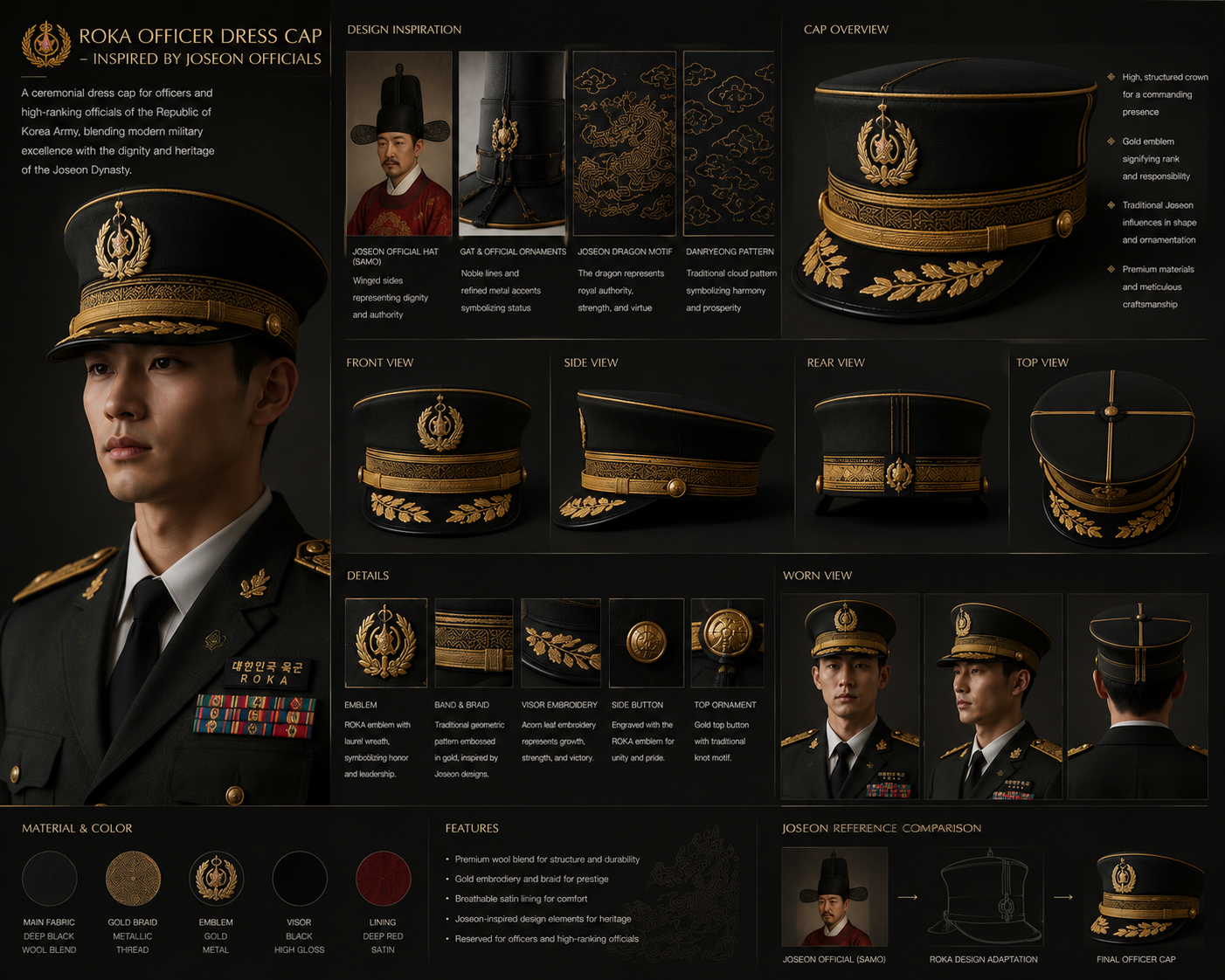
A formal plane informed by Korean headwear rather than a copied service cap.
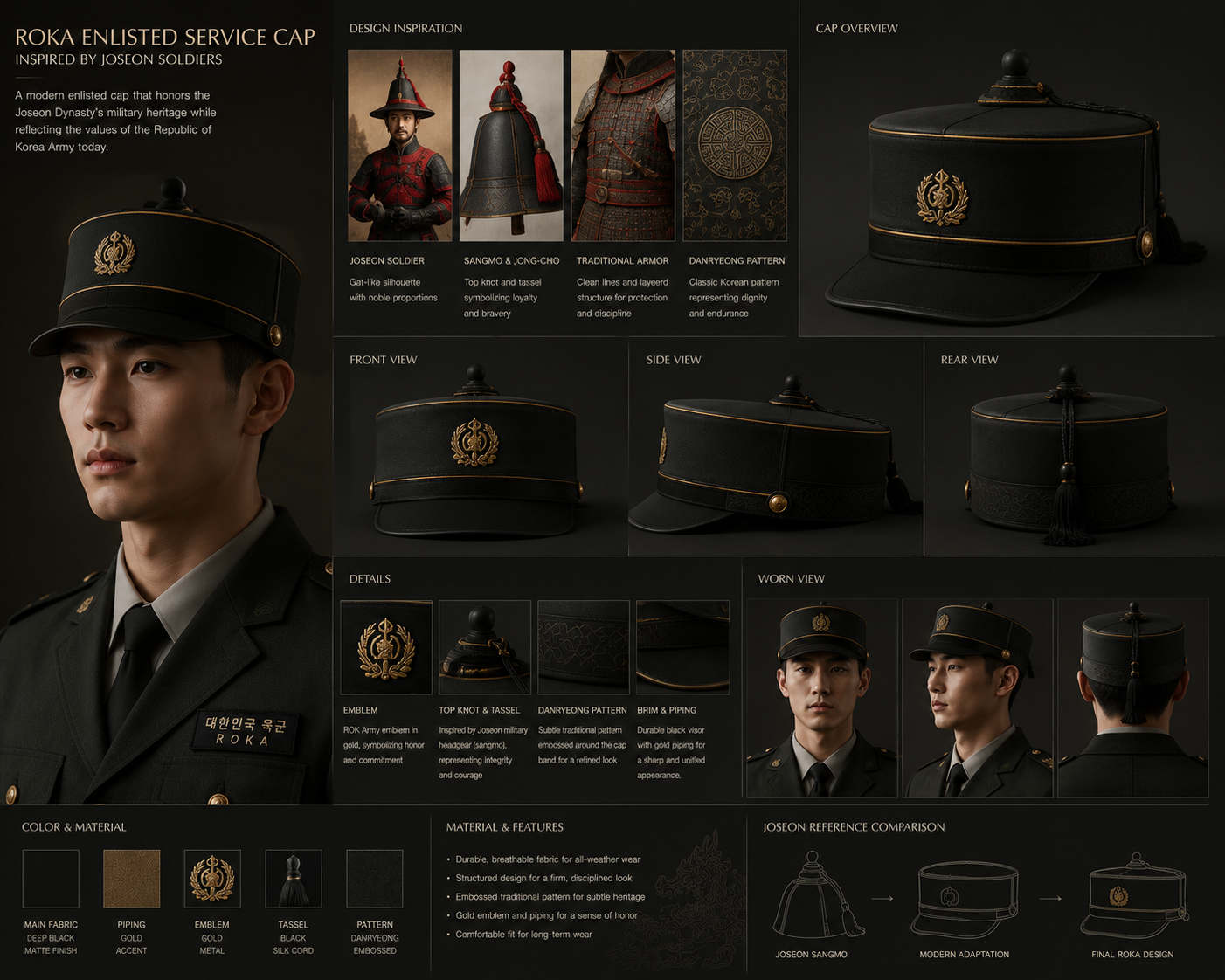
Compact geometry, top knot, and tassel establish a distinct finishing form.
04 · The next chapter
Future development should begin with Korean dress history and Choe Collection’s own design codes, then ask what ceremonial clothing can mean today. The result should feel less like a decorated Western uniform and more like a new formal tradition.
Discuss the direction